The Cairo Genizah
By Rebecca J. W. Jefferson
Introduction
The extensive collections of medieval manuscript fragments known as the Cairo Genizah grew organically through religious and communal practice rather than deliberate intent. A large portion of these fragments were discovered in the Ben Ezra Synagogue in Old Cairo, a key institution during the period in which most of them were produced, and a site that was visited and venerated for many centuries, even after it ceased to function fully as an active synagogue. Unlike other temple collections, the Cairo Genizah manuscript fragments were neither conceptualized as a collection nor maintained as such. Their accumulation was driven by customs of concealment wherein worn or defunct sacred texts and other writings were withdrawn from use and hidden away or buried within and around the synagogue site. Precisely because the material contents of the Cairo Genizah were not intended to be seen, used, or remembered, this form of anti-collecting (combined with favorable climatic conditions) paradoxically enabled the preservation of what would become an unparalleled archive of medieval Jewish life.
What is a genizah?
The Jewish practice of concealing or burying worn out, disused, damaged, or otherwise invalidated sacred texts appears to have been established in antiquity, possibly as early as the Second Temple period, as suggested by the clay pots discovered at Qumran and Masada.

Figure 1. Caves of Qumran where the Dead Sea Scrolls were discovered. Image: Wikimedia Commons.
Written references to this practice are found in early rabbinic literature (e.g., Mishnah Shabbat 16.1 and Babylonian Talmud Shabbat 115a) wherein the sages discussed the type of texts deemed sufficiently holy to warrant rescue from a fire on the Sabbath, as well as those deserving of being set aside in a genizah to naturally decay. Concerns surrounding rescue no doubt arose due to the precarious circumstances of Jewish life in antiquity. The underlying principle was to avoid the active desecration of Kitvei Kodesh (Holy Writings). These early rabbinic dialogues reveal that the practice of genizah (vb. lignoz – to store or hide) was grounded in reverence rather than preservation.
By the Middle Ages, the scope of materials designated for burial rather than destruction was expanded by Moses Maimonides to include non-canonical writings produced with sacred intent. Actual communal practice, as reflected in genizah discoveries and later oral histories, was varied, with some Jewish communities extending the concept to encompass secular writings as well. Over time, the place set aside for texts to decay became known by the derived noun form genizah. This designated hiding or burial space likewise varied across communities and, depending on need and availability, could include cupboards, wall niches, basements, attics, and caves. Some spaces became permanent sites of entombment; others were routinely emptied and the materials, being accorded the same respect as the deceased, were often given elaborate ceremonial burials or interred with a revered scholar.

Figure 2. Israel National Trail - Modiin to Neve Shalom: ma’arat genizah (cave of the genizah). Photograph by Yoav Dotan. Image: Wikimedia Commons.
The Discovery of the Cairo Genizah
The contents of most genizot (plural) did not survive. Set aside for natural decay, they were often stored in spaces with poor environmental conditions, or they were lost altogether through the destruction or abandonment of their sites. Until the nineteenth century, the possibility that ancient texts might be recovered from older synagogues was scarcely entertained. This notion shifted dramatically by the mid-century when the Russian Karaite scholar, Abraham Firkovich, began retrieving unexpected treasures from synagogue genizot in the Crimea and the Near East.
In addition to being hidden away, local superstitions surrounding genizot added to their mystique and impenetrability. Some communities resisted appeals to open their genizah fearing that it would bring about disease or disaster; others tried to deter would-be manuscript hunters by invoking fear of the genizah (for example, claiming that a serpent guarded its entrance). Successful removals of genizah materials generally depended on bribes to less scrupulous custodians or negotiations with the community’s elite, or even through recourse to local authorities.
The world’s most famous genizah came to light unexpectedly during major renovations of the Ben Ezra Synagogue in Fustat (Old Cairo) beginning in 1889. Until that time, the synagogue had remained largely intact for over 800 years. It sat within the walls of the Roman Fortress of Babylon, alongside several old Coptic churches and, at one point, a Karaite synagogue and the synagogue of the Babylonians. The precise founding date of the synagogue of the Palestinian Jewish community (known much later as the Ben Ezra) is unknown. Local folklore claimed the site as the place where the infant Moses was hidden and where the prophet Elijah appeared. Documents discovered in the Cairo Genizah suggest that the original building predated the ninth century.
In 1012, the Fatimid caliph al-Hakim ordered the destruction of Jewish and Christian places of worship, including the original Ben Ezra, which was rebuilt around twenty years later. Between the eleventh and thirteenth centuries, the synagogue served many roles within the Jewish community: as a house of worship, a place of assembly and ceremony, a court, a study hall, and a central hub connecting Jewish communities across the Mediterranean and the MENA region.
As the Jewish population gradually shifted northward toward Cairo, the synagogue in Fustat fell into decline. A fire in the fifteenth century necessitated major interior repairs, but the main structure survived into the nineteenth century. Over the centuries, European travelers visited the Ben Ezra in search of its legendary Scroll of Ezra; by the mid-nineteenth century, however, manuscript collectors began looking for its genizah.
In 1864, Jacob Saphir, a Jerusalemite emissary, scholar, and collector of Hebrew manuscripts, climbed to the roof of the Ben Ezra synagogue and attempted to penetrate a genizah buried under piles of debris from a recent renovation. He was unsuccessful in finding anything of note and he left wondering what lay beneath. Abraham Firkovich visited the synagogue that same year, but nothing appears to have materialized from his expressed intention to open its genizah. In the 1880s, additional manuscripts and fragments emerged in the antiquities market, but the most likely source was the Karaite synagogue in Cairo.
As the synagogue was being restored in December 1889, the British collector, Rev. Greville John Chester, entered the construction site and encountered an exposed room whose floor was covered with fragments of manuscripts. Between 1889 and 1892, the Bodleian Library acquired hundreds of genizah fragments from Chester and the Egypt Exploration Fund. Additional materials recovered from the site went into the antiquities market. Some entered European and American collections (public and private) via the Jerusalemite scholar and book dealer, Solomon Aaron Wertheimer; other purchases of fragments were made locally by figures such as the Archimandrite Antonin of the Russian Ecclesiastical Mission in Jerusalem and the American scholar Cyrus Adler.
While the synagogue was being rebuilt, the genizah fragments were relocated to one or more unknown sites. In 1892, Adolf Neubauer (Bodleian sublibrarian) commissioned Egyptologist Count Riamo d’Hulst to track them down. Three years later, d’Hulst sent a large consignment of fragments from an undisclosed underground location. The re-emergence of the fragments may have drawn the attention of Elkan Nathan Adler, a British lawyer and bibliophile who visited Cairo in January 1896 and left with a sack full.
In May 1896, Agnes Smith Lewis and Margaret Dunlop Gibson, scholarly twin sisters, purchased two sacks of genizah fragments during trips to Palestine and Egypt. When they showed these materials to Solomon Schechter, Cambridge University’s Reader in Rabbinics, he identified among them a medieval Hebrew manuscript copy of Ecclesiasticus. Recognizing its importance for biblical scholarship, Schechter traveled to Cairo in 1896 in search of additional leaves of the text. While there, he retrieved a vast hoard of fragments from a genizah chamber within the Ben Ezra Synagogue, along with additional pieces obtained from other sites and dealers. Schechter, together with his patron Charles Taylor, Master of St. John’s College, donated the collection to Cambridge University Library. The collection was expanded through later acquisitions from the Cairo-based businessman Reginald Q. Henriques and Jerusalemite dealer Samuel Raffalovich.
In 1898, Bodleian-sponsored excavations uncovered large numbers of fragments buried around the synagogue grounds; most were later sold to Elkan Nathan Adler, whose private collection was eventually acquired by the Jewish Theological Seminary of America in New York. Between 1898 and 1910, smaller collections of fragments were purchased by various institutions in Europe and America and by private collectors from dealers in Egypt and Palestine (often through intermediaries). In the early twentieth century, Cairo businessman Jacques Mosseri assembled a large corpus of fragments through excavations in the ancient Jewish cemetery at Bassatine and from the synagogue grounds. Fragments continued to surface on the antiquities market through to present day.
The Legend of the Cairo Genizah
In the late 1890s, published reports of Schechter’s genizah haul began to adopt the phrase “Cairo Genizah” to describe both the site of discovery and the collection removed to Cambridge. Schechter’s own account helped establish the legend that the fragments had lain undisturbed for over 800 years in the synagogue’s second-story genizah chamber. Other collections of Hebrew fragments were consequently treated as disjointed parts of the same original synagogue cache, regardless of their actual provenance.
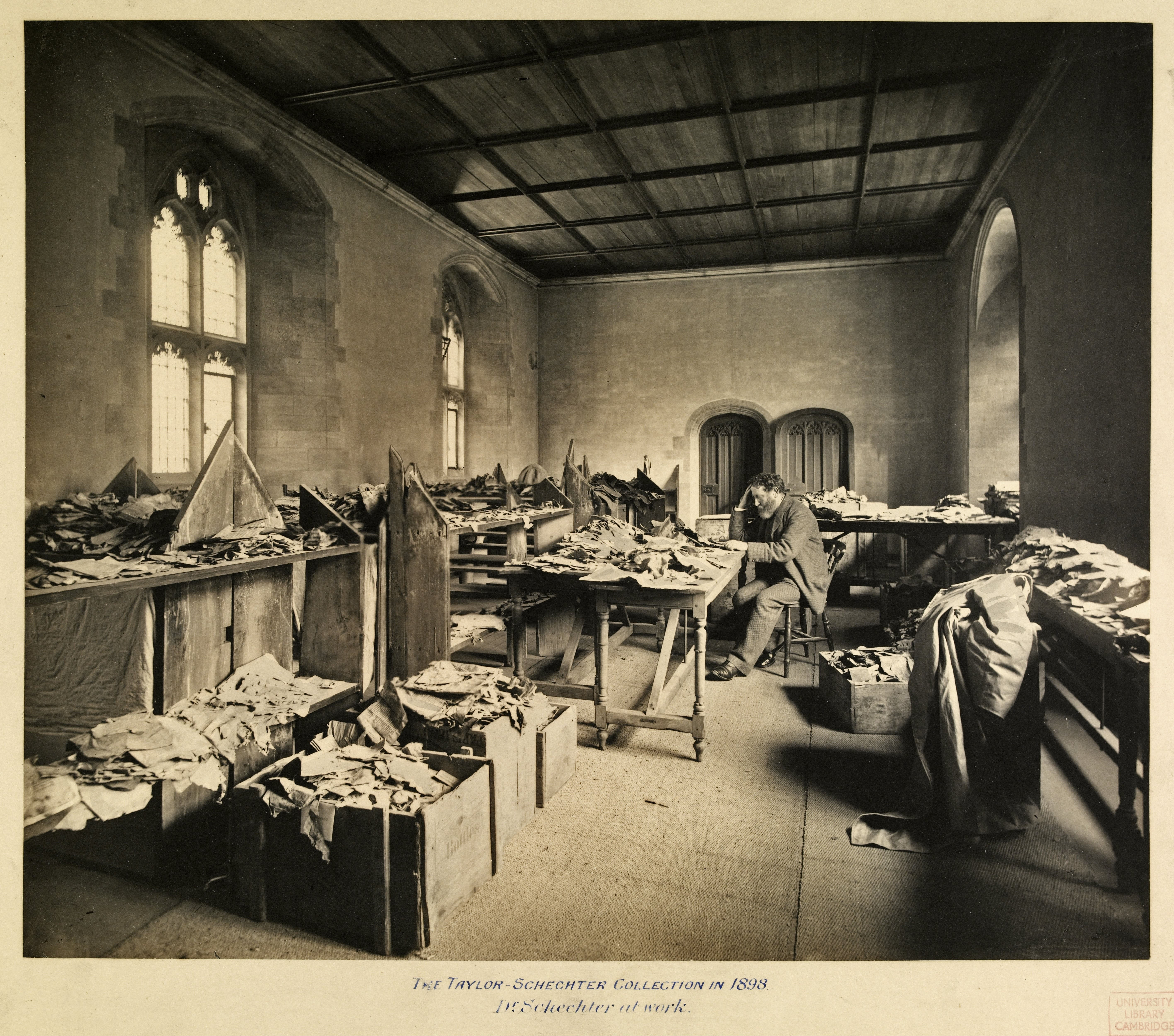
Figure 3. Solomon Schechter examining his hoards of Hebrew fragments in Cambridge. Image: Wikimedia Commons.
While a large portion of the Cairo Genizah fragments can be attributed to the medieval Jewish community of Fustat and its Mediterranean and MENA networks based on content, date, paleography, codicology, or paper and ink types, the origins of some pieces remain uncertain. These may have entered the antiquities market from other sources, particularly in response to growing interest among manuscript collectors. Moreover, even when a fragment clearly derives from medieval Fustat, it is impossible to determine whether it had once been deposited in the medieval synagogue genizah or in some other genizah, since the chamber Schechter encountered was newly constructed in 1892 and may not have been refilled with genizah material until at least 1895.
The Modern Archive
Cambridge University Library boasts the largest Cairo Genizah collection at 193,654 fragments. In addition, Cambridge jointly owns the Lewis-Gibson collection (1700 fragments) with the Bodleian Library, and it currently oversees the Jacques Mosseri Genizah Collection (7,000 fragments) on long-term loan. The Jewish Theological Seminary of America has the second-largest collection (25,453 fragments) thanks to the seminary’s purchase of the Elkan Nathan Adler library, along with fragments from other sources. Elkan Nathan Adler assembled his genizah collection from multiple sources, including the Ben Ezra synagogue, other sites in Egypt, Palestine and Syria, from Bodleian sales, and through dealers.
Smaller Cairo Genizah collections (under 13,000 fragments) are held by the John Rylands Library, the Bodleian Library, the British Library, the library of the Alliance Israélite Universelle, the Strasbourg Bibliothèque nationale et universitaire, the Russian National Library, the Library of the Hungarian Academy of Sciences, and the University of Pennsylvania Libraries. Over thirty other institutions in Europe, America and the Middle East have collections of 500 fragments or less, and around ten known private collectors have a few hundred fragments between them.
Some Cairo Genizah collections were assembled from single sources: the genizah collection at the Library of the Hungarian Academy of Sciences, for example, came into being thanks to the acquisition of David Kaufmann’s library. Other institutions derived their genizah fragments from multiple sources, such as the Bodleian (assembled from at least ten sources), the British Library (at least seven), and the University of Pennsylvania Libraries (at least five).
Cairo Genizah Contents
The Cairo Genizah, as it exists today, is estimated at around 300,000 fragments worldwide. As expected of materials retrieved from genizot, the collections include many sacred and religious texts, such as tens of thousands of fragments of medieval Torah scrolls, Hebrew Bible codices, apocryphal works, mystical texts, liturgical writings, biblical commentaries, Jewish legal texts, and other works of rabbinic literature. Among these they have been many outstanding discoveries, including some of the earliest known copies of the Hebrew Bible (prior to the unearthing of the Dead Sea Scrolls), as well as some of the oldest surviving copies of the Talmud. The Genizah also preserves the lost Hebrew version of Ecclesiasticus, a copy of the Qumran community’s Damascus Document, the oldest identified Jewish prayer book (9th century) and countless Hebrew hymns long forgotten.
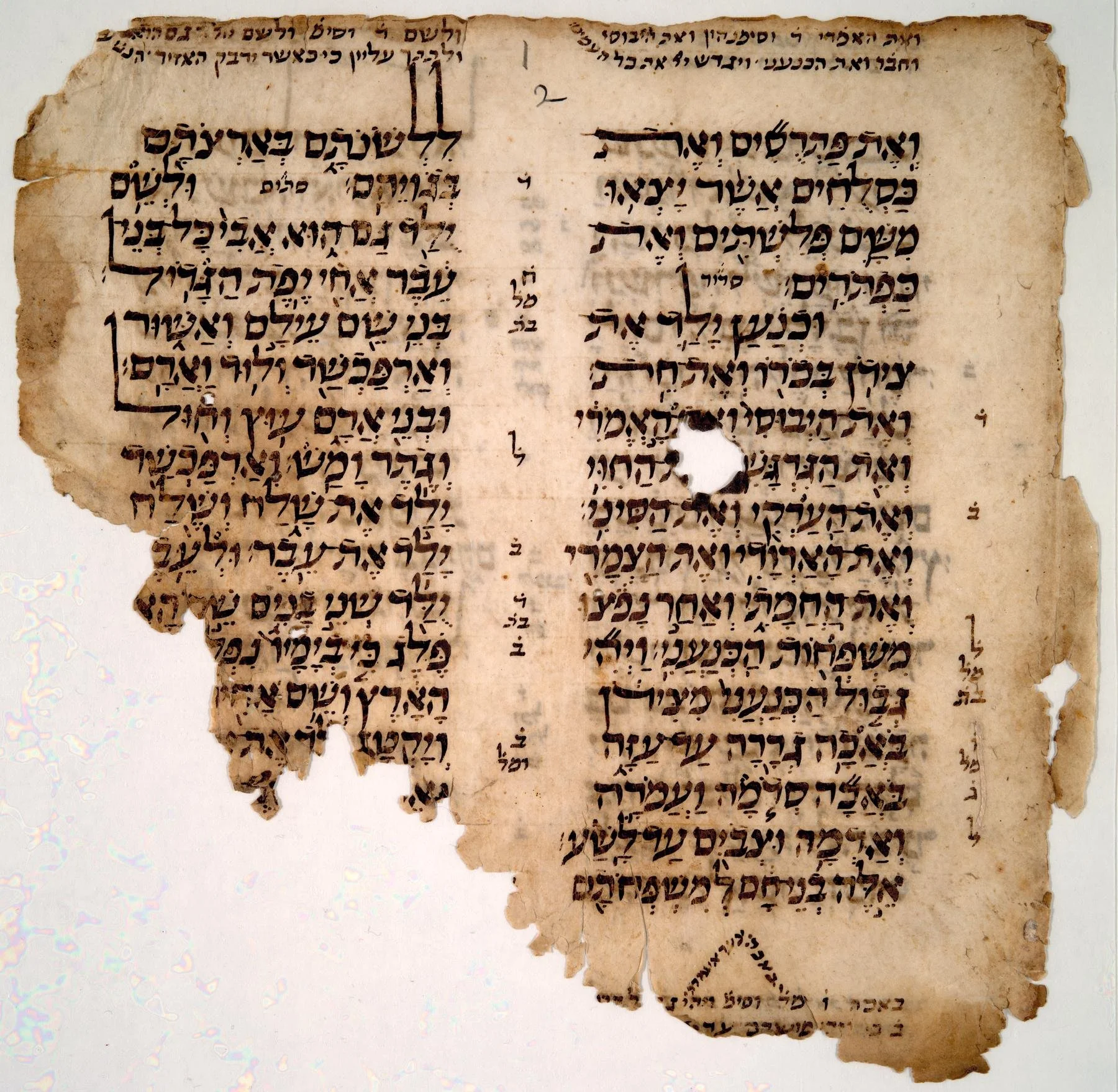
Figure 4. Genesis 10:14-12:15, with Masorah magna and parva. MS Halper 2 (University of Pennsylvania, Center for Advanced Judaic Studies Library, Cairo Genizah Collection).
Beyond religious texts, the Cairo Genizah comprises a vast array of documents and everyday writings that illuminate medieval Jewish life in Fustat and across the Mediterranean, the Middle East, North Africa, and India. These include business correspondence, contracts, legal records, and papers of communal governance. Distinct sets of medieval archives, such as the correspondence of the court clerk Halfon ben Menasseh and official letters exchanged between the leaders of rabbinic academies, were also set aside in the genizah. And more unexpected still, were the large quantities of personal letters, dowries, book lists, shopping lists, medical texts, magical amulets, children’s books, fragments of poetry, medieval philosophy, folk tales and many other secular writings.
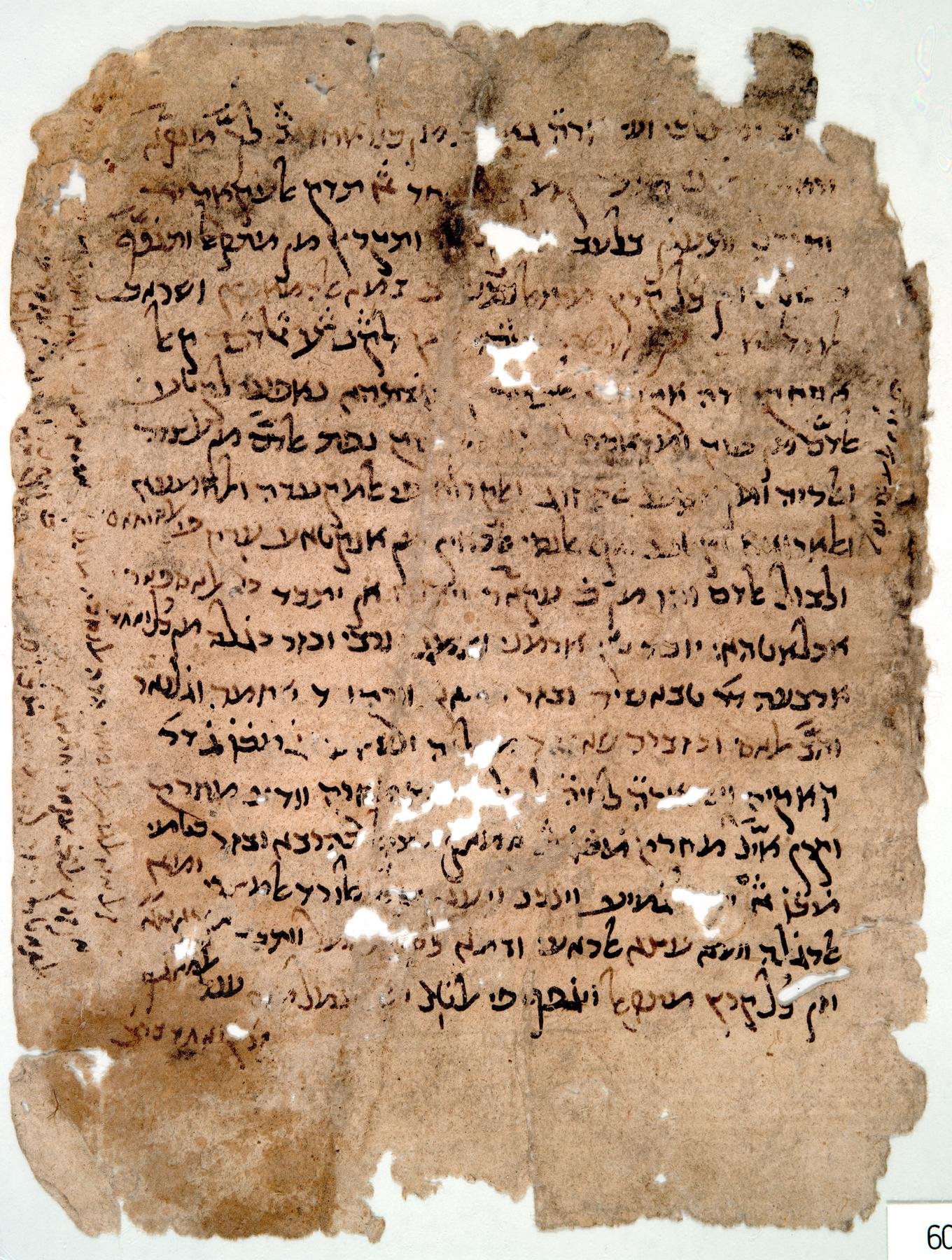
Figure 5. Judeo-Arabic medical textbook. MS. GF 60 (University of Pennsylvania, Center for Advanced Judaic Studies Library, Cairo Genizah Collection).
Inter- and extra-communal interactions appear in fragments associated with the Karaite community, as well as in texts reflecting Jewish, Christian, and Muslim intellectual and social exchange, including court petitions, neighborly disputes, commercial transactions, and translations of non-Jewish works. Historical events affecting the Jewish community (such as the Crusades, or an earthquake in Ramle) appear alongside manuscripts handwritten or signed by prominent figures like Maimonides and Joseph Caro. Non-Jewish texts are also represented in the form of ancient palimpsests and re-used Egyptian chancery documents. The fragments are predominantly in Hebrew, Judeo-Arabic, and Arabic, but numerous others are in Aramaic, Ladino, Yiddish, and other Jewish languages, some previously undocumented. In addition to its value for historical, literary, and linguistic research, the Cairo Genizah fragments offer insights into Jewish material culture, from paleography and codicology to medieval modes of writing and disseminating information.
While the bulk of the material dates from the 11th to 13th centuries, thousands of fragments in the Cairo Genizah collections date from the period following the Jewish exile from Spain, when refugees arrived in countries across the Ottoman Empire. These later fragments include manuscripts, incunabula, and early modern printed texts, providing rich materials for the reconstruction of Jewish life and culture under Ottoman rule.
Scholarship on the Cairo Genizah
The immense scope of the Cairo Genizah filled many gaps in the historical and literary record and illuminated the so-called “dark period” between antiquity and the Middle Ages, a time for which few manuscript sources survive. In the early decades following its discovery, scholarly attention largely focused on reconstructing monumental narratives of Jewish history (key periods, events, figures, and texts) as well as tracing the development of Jewish law, liturgy and literature. Later, as institutions expanded access through cataloging and microfilming, scholars turned to the documentary materials and everyday writings to mine the extraordinary social and cultural insights they offered. The trail was blazed by Shlomo Dov Goitein, whose six-volume opus magnum, The Mediterranean Society, drew on tens of thousands of Genizah documents held across multiple institutions.
Research on the Cambridge Genizah collections was further advanced by Stefan C. Reif’s founding of the Taylor-Schechter Genizah Research Unit in 1974, which led early efforts in comprehensive cataloging and later spurred large-scale digitization initiatives. Building on this groundwork, organizations such as the Friedberg Jewish Manuscript Society pioneered computational tools to virtually reunite scattered fragments. More recently, in today’s AI-driven research environment, undertakings such as the MiDRASH transcription project use Genizah fragments to train AI models to read, decipher, and transcribe historical scripts. The Cairo Genizah’s impact on scholarship is evident in the sheer number of publications it has generated and the frequency with which its fragments are cited. According to statistics pulled from the Friedberg Genizah Project database, 1,042 books are based on or cite Genizah fragments. Genizah material also appears in 700 journal titles, with a total of 733,457 references recorded across a range of published scholarship.
Nevertheless, despite these advances, parts of the Genizah corpus remain invisible. Fragments held in private collections, or in institutional collections with minimal cataloging and no digital surrogates, are mostly inaccessible to meaningful scholarly scrutiny. Even within known collections, major work remains in identifying fragments (particularly those in poor physical condition) and in reconstructing multi-leaf manuscripts from dispersed leaves. Additionally, the attribution of Cairo Genizah provenance to fragments that may in fact derive from other locations or historical contexts risks flattening their object histories and perpetuating interpretive assumptions about origin, use, and transmission.
The Ben Ezra: from synagogue to museum
After it ceased to function fully as a house of assembly, the Ben Ezra Synagogue remained a site of pilgrimage, drawing locals to pray during the High Holidays and foreign visitors intrigued by its venerable age and the legendary Scroll of Ezra. Its metamorphosis into museum-like status occurred after its genizah attracted attention and fame.
In the early twentieth century, after Schechter and others had removed much of the material, the community began to grasp the extent of its loss. Spurred by the interest of local businessman Jacques Mosseri, initiatives were undertaken to acquire copies of key documents for a proposed Jewish museum in Cairo, and structural improvements were initiated around the synagogue, including housing for custodial families.
Following the expulsion of most of Cairo’s Jewish community in the 1950s, the building again fell into a state of disrepair. In the 1980s, the synagogue’s history and the story of its genizah attracted Canadian architect Phyllis Lambert, who led a campaign to get it fully restored. Since then, the Ben Ezra has become a major tourist attraction in Old Cairo, functioning essentially as a museum. A further restoration in 2023 was part of a broader revival of Jewish heritage in Egypt.

Figure 6. Interior of the newly restored Ben Ezra Synagogue. Image: Wikimedia Commons.
Conclusion
The Cairo Genizah provides a salient example of how a temple collection gains historical value independent of or even contrary to its original purpose. After discovery, the fragments underwent a process of musealization through their widespread dispersal and reclassification as objects in archives and museums. Today, due to digitization efforts, Genizah fragments are encountered far removed from their original sacred designation. This transition poses ethical and interpretive questions like those raised concerning other temple collections transferred to secular institutions; namely, how to reconcile religious intent, accidental preservation, and modern scholarly use. The Cairo Genizah is both an uncommon case and a revealing counterexample, demonstrating how a disrupted sacred disposal practice inadvertently created one of the richest archives of Jewish history.
Bibliography
Cohen, M. and Stillman, Y., 1985. The Cairo Geniza and the custom of geniza among Oriental Jewry: An historical and ethnographic survey. Pe’amim, 24, pp.3–35. [Hebrew].
Cohen, Z., 2022. Composition analysis of writing materials in Cairo Genizah documents. Leiden: Brill.
Goitein, S.D., 1967–1993. A Mediterranean society: The Jewish communities of the Arab world as portrayed in the documents of the Cairo Geniza. Vols I–VI. Berkeley, Los Angeles and London: University of California Press.
Goldberg, J.L., Krakowski, E., 2019. Introduction: A Handbook for Documentary Geniza Research in the Twenty-First Century. Jewish History 32, pp.115–130.
Hoffman, A. and Cole, P., 2011. Sacred trash: The lost and found world of the Cairo Geniza. New York: Nextbook/Schocken.
Jefferson, R.J.W., 2018. Deconstructing ‘the Cairo Genizah’: A fresh look at Genizah manuscript discoveries in Cairo before 1897. The Jewish Quarterly Review, 108(4), pp.422–448.
Jefferson, R.J.W., 2022. The Cairo Genizah and the age of discovery in Egypt: The history and provenance of a Jewish archive. London: Bloomsbury.
Jefferson, R.J.W., 2023. The trade in Cairo Genizah fragments in and out of Palestine in the late 19th and early 20th centuries. Journal of Ancient Judaism, 14(2), pp.166–195.
Jefferson, R.J.W., 2025. Tracing the trade in Genizah fragments through Solomon Aaron Wertheimer’s sales correspondence. Fragment of the Month, August. Available at: https://www.lib.cam.ac.uk/collections/departments/taylor-schechter-genizah-research-unit/fragment-month/fotm-2025/fragment-5.
Jefferson, R.J.W., 2025. History of the acquisitions ‘from the Geniza’ in the Bodleian Library: A first assessment. In: G. Corazzol and S. Fargeon, eds. Fragments, manuscrits, livres dans le monde juif. Publications de l’École Pratique des Hautes Études.
Lambert, P., ed., 1994. Fortifications and the synagogue: The Fortress of Babylon and the Ben Ezra Synagogue, Cairo. Montreal: Canadian Centre for Architecture.
Mann, J., 1935. Texts and studies in Jewish history and literature. Vol. II. Philadelphia: Jewish Publication Society of America.
Meital, Y., 2024. Sacred places tell tales: Jewish life and heritage in modern Cairo. Philadelphia: University of Pennsylvania Press.
Olszowy-Schlanger, J., 2025. Jewish vertical codices from the Cairo Genizah: Another way of reading a book. In: S. Greco and J. Olszowy-Schlanger, eds. Counting the miracles: Jewish thought, mysticism, and the arts from late antiquity to the present. Berlin and Boston: De Gruyter, pp.143–162.
Posegay, N., 2022. Searching for the last Genizah fragment in late Ottoman Cairo: A material survey of Egyptian Jewish literary culture. International Journal of Middle East Studies, 54(3), pp.423–441.
Posegay, N., Connolly, M.M. and Outhwaite, B., eds., 2024. From the battlefield of books: Essays celebrating 50 years of the Taylor-Schechter Genizah Research Unit. Leiden: Brill.
Posegay N, Schmierer-Lee M., eds., 2024. The Illustrated Cairo Genizah. New Jersey: Gorgias Press.
Reif, S.C., 2000. A Jewish archive from Old Cairo: The history of Cambridge University’s Genizah Collection. Richmond, Surrey: Curzon.
Rustow, M., 2020. The lost archive: Traces of a caliphate in a Cairo synagogue. Princeton and Oxford: Princeton University Press.
Sadan, J., 1986. Genizah and Genizah-Like Practices in Islamic and Jewish Traditions. Customs Concerning the Disposal of Worn-Out Sacred Books in the Middle Ages, According to an Ottoman Source. Bibliotheca Orientalis, 43, pp. 36-58.
Schechter, S., 1897. A hoard of Hebrew manuscripts. The Times, 3 August, p.13.
Taylor, C., 1898. The Old Cairo Genizah. The Cambridge Review, 3 February, pp.193–194.
Institutional Websites
Cambridge Digital Library: https://cudl.lib.cam.ac.uk/collections/genizah/1
Taylor-Schechter Genizah Research Unit: https://www.lib.cam.ac.uk/collections/departments/taylor-schechter-genizah-research-unit.
Friedberg Genizah Project: https://fjms.genizah.org
MiDRASH: https://www.midrash.eu
Princeton Geniza Lab: https://geniza.princeton.edu/en/
Rebecca J. W. Jefferson, PhD, is the Curator of the Isser and Rae Price Library of Judaica at the University of Florida and a joint faculty member of the Bud Shorstein Center for Jewish Studies. Specializing in the Cairo Genizah and Jewish book history, her research traces the object lives of Hebrew books and manuscripts through their histories of ownership. She examines the roles of private and institutional collectors in shaping how these materials survived upheaval and dislocation to become part of modern libraries and museums. Her work emphasizes that attention to these object histories deepens our understanding of Jewish cultural heritage.